Assays for Investigative-toxicology Applications
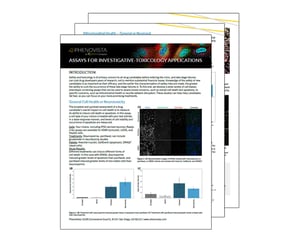
Learn about the importance of assessing safety and toxicology of new drug candidates and review examples of assays for investigative-toxicology applications.
GENERAL CELL HEALTH OR NEUROTOXICITY
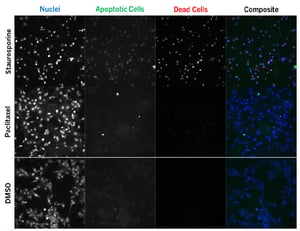
The broadest and quickest assessment of a drug candidate’s overall impact on cell health is to measure its ability to induce cell death or apoptosis. In this assay, a cell type of your choice is treated with your test articles in a dose-response manner, and levels of cell viability and occurrence of apoptosis are measured.
MITOCHONDRIAL HEALTH
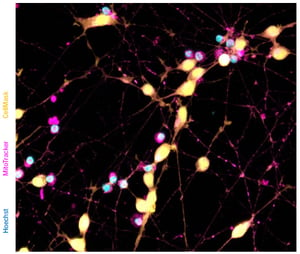
Many drugs that have been withdrawn or that have FDA warning labels are traced back to their effects on mitochondrial dysfunction, which can cause failure of various organs. In neurons, mitochondrial-health assessment can be particularly important, as the brain consumes approximately 20% of the body’s energy. Understanding test-article effects on mitochondrial health/function early in drug development is crucial to characterizing drug safety and preventing late-stage or clinical failures.
NEURITE-NETWORK ALTERATIONS
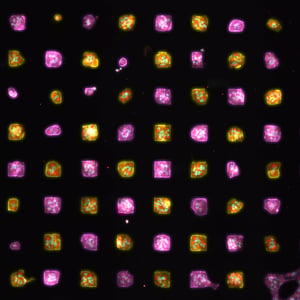
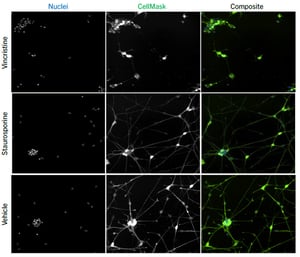
Neurites form the functional network by which neurons connect to enable signal transduction and proper development and differentiation. Neuronal injury or neurotoxicity often feature perturbations in neurite networks, and the assessment of therapeutic candidates’ impacts on neurite-network maintenance is crucial to understanding their safety and toxicity.
CELL PAINTING FOR SAFETY SCREENING
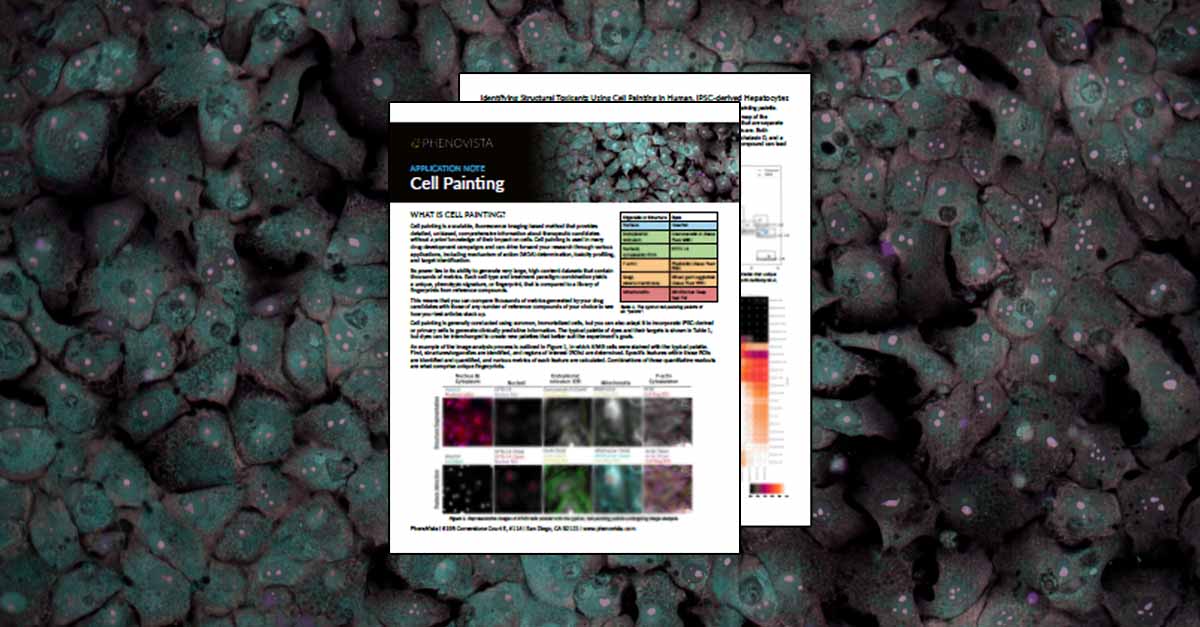
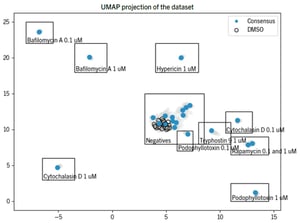
Cell Painting allows for the detection of very subtle changes in phenotypic metrics (e.g., cell shape, texture, organelle structures) in cells that result from exposure to chemicals or drug candidates. By calculating phenotypic fingerprints for each treatment paradigm from a set of over one thousand features, your drug candidates’ effects can be compared to a set of reference compounds to predict the safety/toxicity of your candidates. Cell painting can be especially powerful for detecting early signs of cellular stress/damage before cell death occurs.
DOWNLOAD THE FULL APP NOTE FOR MORE DETAILS & DATA!