

FREQUENTLY ASKED QUESTIONS
IN VITRO ASSAYS PLAY A KEY ROLE IN DRUG DISCOVERY
In vitro assays offer a cost-effective, efficient, and highly reliable way to screen candidate compounds in the early stages of drug development. Whether identifying promising, novel agents or aiming to enhance existing treatments, in vitro assays can be applied to a wide range of systems, from simple mono-cultures of immortalized cell lines to complex cultures of patient-derived tissue samples or iPSC-derived cells.
Benefits include:
- Scalable to high-throughput formats
- Ability to isolate, control, and study specific pathways or systems of interest
- Fast turnaround time compared to in vivo assays

DISCOVER MORE WITH A PARTNER YOU CAN TRUST
"We worked with PhenoVista over a period of almost two years on an exploratory project that came with multiple layers of complexity. We were impressed by the scientific rigor and ingenuity that is part of the culture at PhenoVista. James and team are true collaborators, and they proactively shared ideas to help us achieve our goal. Paired with excellent communication and flexibility to accommodate the scientific-discovery path, we can honestly say that it was a joy to work with PhenoVista."
Dr. Steve Rodems, VP Research and Non-clinical Development | Travere Therapeutics
OUR EXPERTISE
Our goal is to provide you with better data faster, so that you can identify potential, adverse outcomes of your therapeutic candidate early in drug development. By utilizing clinically relevant cell models and cutting-edge, high-content imaging techniques, we provide invaluable insights and support towards your research.
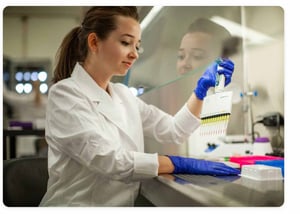
OUR PEOPLE SET US APART
We are a team of scientists, engineers, data scientists, and support staff, who are incredibly passionate about biology and how it propels our world forward. With diverse backgrounds ranging from plant biology to neuroscience, we're able to deliver breakthrough solutions for your most challenging biological questions. We are proud to say that we love what we do and that we get to do it together.

The major strength of using HCI/HCS is in the name; by running one experiment with multiplexed staining, tens to thousands of features can be assessed at a single-cell level. HCI can give information simultaneously at a molecular (e.g., pathway activation or response, subcellular localization, target expression), cellular (e.g., viability, morphology), or population (e.g., cell-to-cell heterogeneity, cell-cell interactions) level, all while maintaining the biological context of the cell culture. This depth and breadth of information typically require the implementation of several different assays to obtain, and several of these can only be obtained through imaging.
Another major advantage of using HCI is its adaptability. These assays can use any kind of cell, including immortalized lines, iPSC-derived cells, patient-derived cells, in any kind of culture format, from 2D monocultures to 3D co-cultures of multiple cell types. HCI assays can also be scaled up to high-throughput screens because of its cell-based nature.
Read our blog post for a more detailed summary: Unique Benefits of Using High-content Imaging in Non-clinical R&D
We work with a diverse range of industries. Although our clients are typically from the biotechnology and pharmaceutical industries (human and animal) developing new drugs and therapies for a variety of disease areas, we also work with non-profit and rare-disease organizations in their efforts to understand the basic biology and effects of genetic and/or under-studied conditions.
Our client pool includes a variety of industries outside of drug discovery as well. We work with agricultural sciences to test the safety of their new products like pesticides, as well as cosmetics and nutraceutical/wellness companies to assess efficacy and safety of their products from both a product-development and marketing standpoint.
You can read more about how cell-based assays can benefit non-pharmaceutical markets like the nutraceutical industry in our blog post In vitro Assays in the Nutraceutical Industry”
CROs have specialized expertise that can be leveraged to expand your program’s capabilities and knowledge without burdening your team’s bandwidth. This can lead to accelerated drug/product development by enabling quicker prioritization of lead candidates. Working with a CRO can also cut research costs by saving you from hiring and training qualified staff and/or buying or maintaining equipment.
Unlike most CROs, PhenoVista offers more than off-the-shelf assays. We act as an extension of your team and lab, working with you from experimental design to delivery of a presentation-ready report with regular updates and check-ins throughout the duration of the project. We have experience working with companies at all stages, and our experience in diverse industries informs us of the challenges faced by different types of R&D programs. We pride ourselves on our attention to detail, high-quality data, and friendly customer service.
We have three main categories of assay services: Imaging & Analysis, Ready-2-Go, or custom assays (our most requested). PhenoVista’s core capabilities focus on the development, execution, and analysis of cell-based assays through high-content imaging across numerous areas of biology and disease. We routinely design and develop customized workflows to generate diverse readouts at the cellular and subcellular levels – from whole-cell marker positivity to nuclear/organellar localization and more.
Client-project designs range from completely bespoke, development projects to pre-validated, off-the-shelf assay services and straightforward onboarding/analysis of client-generated samples. For a more detailed overview of our service options, visit https://phenovista.com/assay-services or contact us.
We regularly use a wide array of cell types in our assay services, including immortalized, primary, iPSCs, and patient-derived cells. Models can be developed in many formats, from 2D monocultures to 3D co-cultures of multiple cell type. While we do not offer tissue analysis, PhenoVista has established expansive 3D, high-content imaging assays to characterize more complex, physiologically relevant cellular models, such as spheroids, organoids, and 3D, bio-printed co-cultures that incorporate diverse cell types. We support both fixed-endpoint analysis and live-cell imaging, and we will work with you to determine the most efficient and effective experimental design.
Depending on the assay design, we have the flexibility to evaluate a broad spectrum of therapeutic agents, including:
- Small molecules
- Targeted therapeutic antibodies
- Antibody-drug conjugates (ADCs)
- Other large and small biologics (such as natural products and peptides)
- Therapeutic siRNAs
- Antisense oligonucleotides
- CAR-T cells
PhenoVista’s core expertise is in high-content imaging and assay development, execution, and analysis. In addition to imaging, we have a FLIPR system for measuring ion flux to get direct, functional readouts, which is popularly used for assessing neuronal function and cardiotoxicity. We also support plate reader-based assays, such as ELISAs for measuring cytokine release.
If your project requires generation of complementary datasets (e.g., RNA-seq, qPCR, proteomics, metabolomics), we offer parallel generation of cellular samples for external analysis. We ship these materials to you, your preferred service provider, or to one of our partners (see the list here https://phenovista.com/our-partners) for these orthogonal services and analyses.
Some clients use our cell-based assays to screen large compounds libraries for hits to take into in vivo studies. Other clients work in the other direction; they test their leads in our human-relevant systems after they showed promise in non-human, animal studies, especially for data that profile drug safety and toxicity and for determining mechanisms of action.
Overall, in vitro studies are much more efficient than in vivo studies because they have much quicker turnaround times, can be scaled up relatively easily, and may increase clinical translatability through the use of human cells. The large facilities and full-time, animal-care staff required for animal studies themselves often render in vivo studies inaccessible to small and mid-size companies.
The relationship between in vitro and in vivo assays is coming more to the forefront now, with both the US and Europe making changes in their requirements for drug approval. For a more detailed overview of this relationship, you can read out blog post On in vivo vs. in vitro Models
3D cell models may increase biological complexity and, therefore, clinical relevancy compared to 2D models. An effective 3D model may provide realistic cell-cell and cell-matrix interactions and reflect the multicellular, spatial organization of tissues. This increased complexity typically requires much more optimization, financial cost, and validation, compared to 2D models.
Depending on the goals of your project, a 3D system may not be needed to answer our clients’ immediate research questions. We work with you to determine the most efficient way to overcome your research hurdles, which often means starting with a 2D system and then potentially moving into a 3D assay, or comparing 2D vs 3D models before deciding which to use for compound screening.
Cell painting is a powerful and data-rich approach to phenotypic profiling of cells. By using a set of dyes that stain various subcellular features, thousands of structural and textural features can be measured to generate unique phenotypic profiles, or fingerprints, of cells after a specific treatment paradigm. This unbiased, agnostic approach to high-content imaging is used for a variety of reasons, including but not limited to determining mechanisms of action, target identification, toxicity screening, or characterization of genetic mutations.
To learn more about this technology, you can visit our resource page to find downloadable materials, such as our white paper The Value of Phenotypic Profiling
and our cell painting application note.
CONTACT US
Let's discuss how we can help with your research.